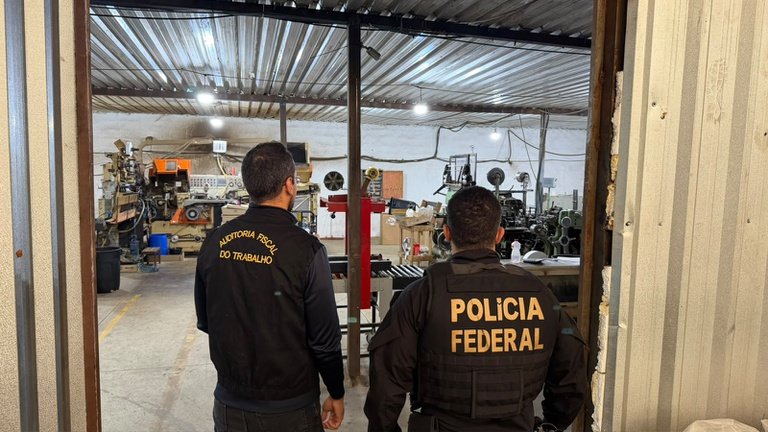
Brazilian labor inspectors rescued 21 workers from clandestine cigarette-related sites in the interior of São Paulo state on November 10, 2026, authorities said. The operation covered facilities in Américo Brasiliense, Araraquara and Bebedouro and was coordinated with the Federal Police’s Operation Hesychia.
The Ministry of Labor and Employment, known as the MTE, said inspectors found conditions administratively characterized as analogous to slavery under Brazil’s labor enforcement framework. It reported that workers had gone unpaid, worked shifts of about 12 hours on all seven days of the week, faced threats and had their mobile phones retained. Inspectors also reported restricted movement and degrading accommodation inside factory buildings.
The finding does not establish criminal guilt. The Federal Police are continuing an investigation into suspected illegal cigarette production, contraband, human trafficking and submission to labor analogous to slavery. No individuals were identified in the consulted official releases, and no charges, convictions or arrests were reported.
Who was found at the sites
According to the MTE, the group included four Brazilians—two found in Araraquara and two in Bebedouro—and approximately 17 Paraguayans in Américo Brasiliense. The reported total was 21 workers, while the ministry described the Paraguayan contingent as “approximately” 17.
Authorities said the Paraguayan workers had been recruited with false promises of employment. Their irregular immigration status, the MTE said, increased their vulnerability. That combination is significant in a labor inspection because workers without regular status or local documentation can be more dependent on those controlling housing, transport, communications and access to work.
The reported retention of phones and confinement inside the factory buildings describes a mechanism of control beyond poor working conditions alone: it may limit a worker’s ability to seek assistance, contact relatives or leave a workplace. The police investigation will determine whether criminal offenses occurred and who, if anyone, may be legally responsible.
An interagency operation targeting alleged illegal production
The rescue formed part of Operation Hesychia, which began on November 10. The Federal Police said it executed 20 search-and-seizure warrants and nine non-custodial precautionary orders across São Paulo, Mato Grosso do Sul and Bahia. The consulted Federal Police release did not announce any arrests.
Police said the case developed from earlier operations, Amerimnia and Nepsis. Investigators alleged that the group under investigation imported machinery and inputs for cigarette production and used clandestine facilities. Those are allegations under investigation, not findings of criminal liability.
For readers outside Brazil, the case illustrates how labor enforcement and criminal investigations can proceed on separate tracks. Labor inspectors can document workplace conditions and apply Brazil’s administrative characterization of labor analogous to slavery. At the same time, police and prosecutors must investigate potential criminal conduct under the procedures required for charges and a possible trial. The labor rescue therefore provides an immediate protection measure for workers, while the criminal case remains unresolved.
What the administrative finding means
Brazil’s administrative response focuses first on removing workers from reported abusive conditions and securing access to assistance. In this case, the official measures included emergency accommodation and food. Authorities also planned assisted return arrangements for the Paraguayan workers.
Workers who need it may receive CPF registration, the Brazilian taxpayer identification number that is widely used for access to services and formal transactions. Eligible rescued workers may also receive six installments of unemployment insurance, each equal to the minimum wage. These measures are designed to give people removed from an exploitative workplace an immediate means of subsistence and a route to documentation or return arrangements.
The response reaches beyond the workplace inspection. The Labor Prosecutor’s Office, or MPT, and the Federal Public Defender’s Office, or DPU, were evaluating judicial measures related to labor compensation, damages and accountability. The package does not report that such measures had yet been filed or decided.
Why it matters
The case links alleged illicit cigarette production with a labor-rights intervention involving Brazilian and Paraguayan workers. Its cross-border element is not only the nationality of most of those rescued: authorities said recruitment was based on false work promises and that irregular immigration status heightened vulnerability.
The reported conditions—unpaid work, seven-day schedules, threats, controlled communications and housing within production sites—show why the operation involved labor inspectors alongside police. The first institutional consequence was the removal of workers and provision of emergency support. The next legal questions concern whether investigators can substantiate the suspected offenses and whether the MPT and DPU will pursue compensation, damages or other accountability measures.
What happens next
The Federal Police will continue Operation Hesychia’s criminal investigation. Separately, labor authorities and partner institutions are arranging immediate support, documentation where required and assisted return arrangements for Paraguayan workers. Any criminal charges or findings of liability would depend on subsequent investigative and judicial steps; none had been reported in the official releases consulted.