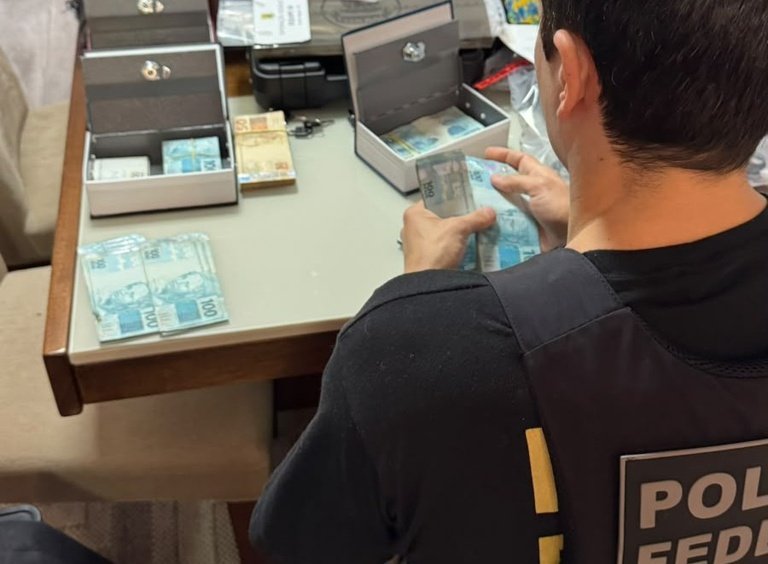
Brazil’s Federal Police launched Operation Deságue on November 13, 2026, to investigate suspected fraud in emergency contracts for floodwater pumps used after the 2024 floods in Rio Grande do Sul. The contracts in question were financed with federal disaster-response funds and covered services in the neighboring municipalities of Canoas and Cachoeirinha.
The case concerns the public purchasing process during an emergency: the rental, installation and operation of pumps intended to remove floodwater. Investigators are examining whether amounts charged to local governments bore a justified relationship to the costs of supplying and operating the equipment. The allegations remain at the investigative stage. No arrests, criminal charges or findings of guilt were reported.
What the federal investigation is examining
Under orders from the federal guarantees court attached to Porto Alegre’s 7th Federal Court, police executed 13 search-and-seizure warrants. The searches took place in seven cities in Rio Grande do Sul and in Itapema, in the neighboring state of Santa Catarina.
The court orders also authorized the blocking of more than R$10 million in financial assets. Police seized three vehicles.
According to the Federal Police, a contractor that did not have operating capacity compatible with the work allegedly subcontracted specialized companies to provide the pumping services for less than the sums billed to the municipalities. That alleged gap between the underlying service costs and the public invoices is central to the inquiry.
Investigators also reported cash withdrawals and transfers to individuals or companies with no apparent link to the pump operations. The police have listed potential offenses under investigation, but their operation does not establish that any person or company committed a crime.
The Canoas comparison
The most specific financial allegation disclosed by police concerns Canoas. The Federal Police said it compared municipal measurements with contracts held by companies that supplied and operated the equipment. In some cases, it alleges, amounts charged were nine to ten times the underlying operating costs.
Police estimated documented suspected overpricing in Canoas at no less than R$7 million. That estimate applies to the Canoas contracts, rather than necessarily to the full set of contracts being investigated across both municipalities.
The comparison illustrates the mechanism investigators are testing: a municipality may need equipment quickly during a disaster, but emergency procurement still produces a record of contracted services, measurements and payments. Authorities can compare those records with the cost of the specialized work actually performed by suppliers. A substantial disparity does not by itself resolve the legal case, but it is the factual basis cited by police for investigating whether public funds were improperly billed.
Cachoeirinha contracts are also under scrutiny
In Cachoeirinha, the investigated pumping service ran from May 13 to June 13, 2024. It involved two transfer pumps, assisted operation and related accessories.
Federal Police investigators allege that some quotations used in that contracting process were fabricated or were signed only after the work had started or ended. The inquiry will need to establish the origin, timing and validity of those documents, as well as whether any irregularity affected the use of federal response funds.
The two municipalities are therefore connected by the broader post-flood contracting investigation, but the disclosed allegations are not identical. The police’s nine-to-tenfold billing comparison and minimum R$7 million estimate specifically concern Canoas.
Emergency procurement and the accountability issue
Emergency contracts can shorten normal purchasing procedures when public authorities need services immediately. In this case, the need was tied to floodwater management after the 2024 disaster. The investigation focuses on whether the speed and exceptional conditions of that response were exploited in the contracting, subcontracting and billing chain.
Because the contracts were financed with federal disaster-response money, the case also concerns controls over how funds transferred for a local emergency are spent. The asset freeze of more than R$10 million is a precautionary judicial measure within the investigation; it is not a judgment on the merits of the allegations.
For residents of Canoas and Cachoeirinha, the issue is whether money allocated for flood response was used for the services contracted. For federal authorities, the case tests the documentation and oversight surrounding emergency expenditure after a major disaster.
Municipal responses and what happens next
Canoas said it had ordered the preservation of records and opened an administrative review. The city initially required a preliminary report within five business days to determine whether further disciplinary or control proceedings should be opened.
João Batista Portella Pereira, who was Canoas finance secretary when the contracts were handled and later served as secretary-general, was removed after becoming a target of the operation. Pereira said he did not choose the contractors, describing his role as releasing payments after receiving executed contracts. He denied an improper connection and said he was available to investigators.
Cachoeirinha said the events under investigation occurred during the previous administration. It said no search was carried out at the current municipal executive’s offices and that it was available to cooperate with investigators.
The immediate next steps include the police examination of material obtained through the searches and the municipalities’ internal reviews. Any eventual criminal charges, administrative sanctions or recovery of funds would depend on subsequent investigative and legal proceedings.